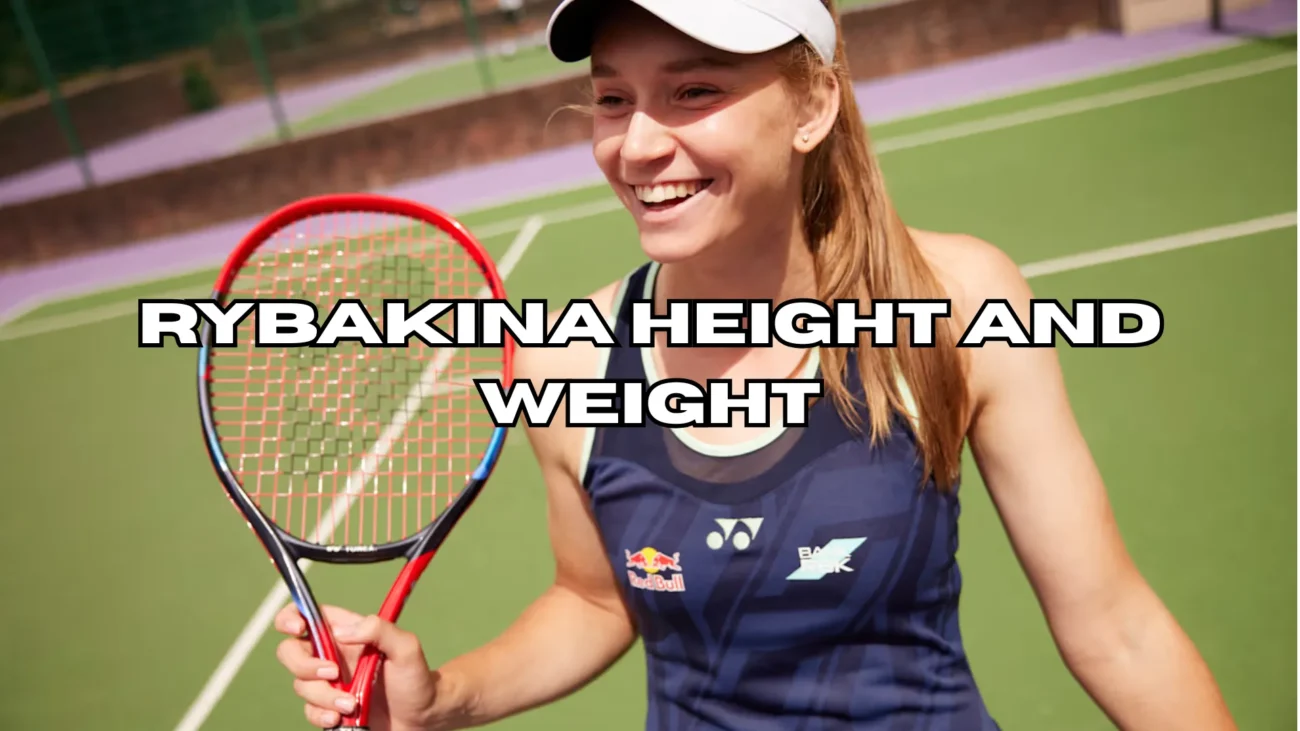
Elena Rybakina has established herself as one of the most powerful and consistent players in women’s tennis. Her Grand Slam success, elite serving ability, and calm approach under pressure have made her a regular contender at the sport’s biggest tournaments. Alongside interest in her rankings and achievements, many fans search for information about Rybakina height and weight to understand how her physical attributes contribute to her performance.
At first glance, height and weight may appear to be simple statistics listed on a player profile. In professional tennis, however, those measurements influence nearly every aspect of performance. Serve mechanics, court movement, recovery, injury prevention, endurance, and shot production are all affected by an athlete’s physical structure.
Discussing Elena Rybakina’s measurements stop after listing a few numbers. They rarely explain how those measurements affect her game, the challenges associated with being one of the taller players on the WTA Tour, or why body composition matters more than weight alone. They also overlook the practical realities of maintaining elite-level conditioning across an eleven-month professional tennis season.
Elena Rybakina — Full Biography
Elena Rybakina Height and Weight
Official Measurements
Elena Rybakina is officially listed at approximately 6 feet 0 inches (1.84 meters) tall and around 159 pounds (72 kilograms).
These measurements place her among the taller athletes regularly competing near the top of the women’s game. While tennis includes players of various body types, Rybakina’s height immediately stands out when compared with much of the tour.
Physical measurements published by sports organizations should be viewed as approximations rather than exact day-to-day figures. Professional athletes experience natural fluctuations due to hydration levels, training cycles, travel schedules, and tournament demands.
Why Fans Are Interested in Rybakina’s Measurements
Interest in athlete measurements often increases when players dominate specific areas of competition.
In Rybakina’s case, her serve has become one of the most feared weapons in women’s tennis. Fans naturally wonder whether her height contributes to this advantage. The answer is yes, but height alone tells only part of the story.
Many players possess similar physical dimensions. What separates Rybakina is her ability to convert those natural attributes into practical on-court advantages through technique, training, and consistency.
How Height Influences Modern Tennis Performance
The Physics Behind a Taller Player’s Serve
One of the most significant benefits of Rybakina’s height appears during service games.
A taller player strikes the ball from a higher contact point. This allows the serve to travel downward into the service box at a steeper angle while maintaining high velocity.
The result is a combination that every tennis player seeks: power and control.
Players with lower contact points often need to sacrifice one for the other. Rybakina’s physical dimensions help reduce that trade-off.
This advantage becomes particularly valuable during important moments such as break points, tiebreaks, and late stages of Grand Slam matches.
Increased Reach on the Court
Height also improves court coverage in ways casual fans may overlook.
Longer arms and greater reach allow players to:
- Retrieve difficult shots
- Stretch for wide balls
- Defend powerful returns
- Cover the net more effectively
These small advantages accumulate throughout a match.
Over hundreds of points, a player may reach several shots that shorter competitors cannot comfortably access.
Why Weight Matters Less Than Body Composition
The Problem With Weight Discussions in Tennis
Many discussions about athlete weight miss an important point.
Weight alone provides very limited information about performance.
Two athletes may weigh exactly the same amount while possessing dramatically different levels of strength, endurance, and athletic ability.
Professional tennis performance depends more heavily on:
- Muscle mass
- Explosive power
- Mobility
- Recovery efficiency
- Core strength
- Stability
These factors are far more important than a simple number on a scale.
What Elite Tennis Conditioning Looks Like
Modern tennis requires athletes to perform repeated explosive movements for hours at a time.
Players must accelerate, decelerate, change direction, jump, rotate, and recover continuously.
This places extraordinary demands on the body.
Rybakina’s physical conditioning program likely prioritizes performance metrics rather than weight targets. Strength, durability, and movement quality are typically more important goals for elite athletes.
The Hidden Challenges of Being a Tall Tennis Player
Movement Requires More Work
Many fans assume height only creates advantages.
The reality is more complicated.
Taller athletes often need to invest additional effort into movement training. Longer limbs create larger movement patterns, which can make rapid direction changes more difficult.
Maintaining agility at six feet tall requires extensive conditioning.
This is one reason coaches place significant emphasis on footwork drills, balance exercises, and movement efficiency.
Injury Risk Management
Another topic competitors rarely discuss involves injury prevention.
Taller players often experience increased stress on:
- Knees
- Ankles
- Hips
- Lower back
The forces generated during serving and sprinting place substantial demands on these areas.
Managing those stresses requires year-round conditioning and recovery protocols.
Without proper maintenance, small physical issues can develop into long-term injuries.
How Rybakina Compares to Other Top WTA Players
Height Comparison Among Elite Competitors
Women’s tennis currently features successful athletes across a wide range of physical profiles.
Approximate heights include:
| Player | Height |
| Elena Rybakina | 6’0″ |
| Aryna Sabalenka | 5’11” |
| Iga Świątek | 5’9″ |
| Coco Gauff | 5’9″ |
| Jessica Pegula | 5’7″ |
Rybakina’s height provides advantages, but it does not automatically make her superior.
Each player uses different strengths to compete at the highest level.
Different Paths to Success
A common misconception in tennis is that one physical profile represents the ideal athlete.
History proves otherwise.
Some champions dominate through power.
Others succeed through speed, defense, anticipation, or tactical intelligence.
Rybakina’s success comes from maximizing her physical strengths while minimizing potential weaknesses.
Why Court Surfaces Matter for Taller Players
Grass Courts Often Favor Height
Grass courts reward strong serving.
Because the surface produces lower and faster bounces, powerful servers frequently gain an advantage.
This partially explains why taller players often perform well during grass-court seasons.
Rybakina’s Wimbledon title demonstrated how effectively her game translates to this environment.
Hard Courts Reward Efficient Power
Hard courts place a premium on aggressive baseline play.
Rybakina’s ability to generate pace without excessive physical effort allows her to compete effectively on these surfaces.
Her style reduces unnecessary energy expenditure while maintaining offensive pressure.
Clay Courts Present Different Challenges
Clay slows the ball and extends rallies.
Movement becomes more important than pure power.
Taller players sometimes face additional challenges because longer rallies increase physical demands.
Success on clay often requires adapting strategies and improving defensive movement.
What Most Articles Get Wrong About Athlete Measurements
Published Weights Are Not Static
One overlooked reality is that athlete weight changes throughout the year.
Factors influencing fluctuations include:
- Travel schedules
- Training intensity
- Tournament frequency
- Hydration levels
- Recovery cycles
A listed weight should be viewed as a general reference point rather than a permanent figure.
Fitness Matters More Than Appearance
Public discussions often focus on appearance rather than performance.
Professional athletes train for functionality.
Their objective is not achieving a particular look but optimizing movement, endurance, power, and injury resistance.
This distinction is critical when evaluating any athlete’s physical profile.
The Sports Science Behind Rybakina’s Power
Power Comes From More Than Size
Many fans attribute Rybakina’s power solely to height.
Sports science suggests a more complex explanation.
Power generation depends on:
- Technique
- Timing
- Strength
- Kinetic chain efficiency
- Flexibility
- Coordination
Height contributes, but it is only one component.
Without proper mechanics, physical advantages produce limited results.
Efficiency Is Her Biggest Strength
One characteristic that separates Rybakina from many competitors is efficiency.
She often appears relaxed while generating significant power.
This efficiency reduces energy expenditure and allows her to maintain performance levels during long matches.
Many sports scientists consider efficient movement one of the most valuable traits in professional tennis.
The Physical Demands of a Full WTA Season
Travel Creates Additional Challenges
Professional tennis players spend much of the year traveling internationally.
Different time zones, climates, and playing conditions place additional stress on the body.
Maintaining optimal physical condition becomes significantly more difficult under these circumstances.
This aspect of professional tennis is rarely discussed in articles focused solely on measurements.
Recovery Becomes a Competitive Advantage
Elite players often dedicate as much attention to recovery as training.
Recovery strategies may include:
- Physical therapy
- Mobility work
- Nutrition planning
- Sleep optimization
- Injury prevention exercises
Over a long season, recovery quality often influences results as much as technical skill.
Why Rybakina’s Physical Profile Fits Modern Women’s Tennis
The modern game rewards athletes who can combine power with movement.
Rybakina’s height supports serving dominance and shot production, while her conditioning allows her to remain competitive during extended rallies.
What makes her particularly effective is not simply her stature but her ability to integrate physical advantages into a complete game.
Many players possess impressive physical tools. Far fewer develop the technical and tactical skills necessary to maximize them.
That combination explains why Rybakina consistently competes among the world’s elite players.
Conclusion
Rybakina height and weight are often discussed because they help explain certain aspects of her success. Standing approximately 6 feet tall and weighing around 159 pounds, she possesses physical attributes that support one of the most effective serves and aggressive baseline games in women’s tennis.
However, focusing exclusively on measurements misses the larger story. Professional success depends on how those attributes are developed, maintained, and applied under competitive pressure. Movement training, strength development, injury prevention, recovery, and technical refinement all contribute to performance at the highest level.
Rybakina’s achievements demonstrate that physical advantages matter, but they become meaningful only when combined with elite skill, discipline, and consistent execution. That combination is what has made her one of the most respected players on the WTA Tour.
FAQs
Elena Rybakina is officially listed at approximately 6 feet 0 inches (1.84 meters).
Her reported playing weight is approximately 159 pounds (72 kilograms).
Yes. At 6 feet tall, she is taller than many players on the WTA Tour and ranks among the taller athletes consistently competing at the highest level.
Yes. A higher contact point allows for steeper serving angles and increased power, which contributes to her effectiveness on serve.
Both players are among the taller athletes on tour and rely on powerful baseline games, though their movement patterns and tactical approaches differ.
Travel, hydration, training intensity, recovery cycles, and competition schedules can all cause normal fluctuations throughout the year.
